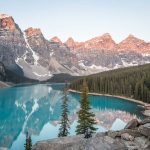
When is the best time to visit Banff? It depends much more on what you want to do than on which month has the nicest weather. Summer is ideal for turquoise lakes and big mountain hikes, but it’s also the busiest time. Winter is wonderful for skiing and snow-covered scenery, while spring and fall offer different experiences altogether.
We live in Canmore and enjoy the Rockies in every season. Here’s how I’d choose when to visit Banff based on the activities that matter most to you.
Listen to Episode 4 of The Banff Travel Podcast
3 Key Takeaways
- Choose your season based on your must-dos. Turquoise lakes, skiing, alpine hiking and fall colour have different ideal windows.
- Spring has advantages and limitations. April and May can be quieter, but many lakes and high trails are still snow-covered.
- September is an excellent hiking month. Cooler temperatures and the start of larch season are highlights, though some trails stay busy.
Visiting Banff in Winter: December to March
If you’re coming for snow, winter sports and frozen lakes, winter is the right season. You can go downhill skiing at Banff Sunshine, Lake Louise Ski Resort and Mt. Norquay, cross-country ski, snowshoe, enjoy winter walks and, when conditions are safe, skate on frozen lakes.
Some winter activities depend on sufficient snow and safe ice, which is why I wouldn’t automatically expect everything to be ready in November or early December. If skating is one of your must-dos, mid-December or January may give you a better chance than an early winter trip, but ice conditions always need to be checked to be safe (this is your responsibility).
Banff looks completely different in winter, with snowy forests and white mountain peaks. Just be prepared for cold weather, short daylight hours and possible winter driving conditions. See our Banff skiing guide if skiing is a big part of your plans.
Visiting Banff in Spring: April and May
Spring brings longer days, fewer visitors and some beautiful mountain scenery. I especially love seeing snow-covered peaks against blue skies. Bears begin emerging in spring, and it’s an interesting time for wildlife viewing from a safe distance.
It’s also a good time for spring skiing, sightseeing, scenic drives and lower-elevation walks. What it isn’t is the best time for high-elevation hiking. Many trails remain snowy, and avalanche terrain can still be dangerous.
What About Lake Louise and Moraine Lake in Spring?
Lake Louise often remains frozen until late May or early June, depending on the year. Moraine Lake will also remain frozen until late May or into June, and the road doesn’t reopen for shuttle access until June.
Smaller and lower-elevation lakes, including Johnson Lake and Two Jack Lake, may thaw earlier. If the bright turquoise colour is important to you, don’t book an April trip expecting to see it.
You can check the Fairmont Chateau Lake Louise webcam to see the lake’s actual conditions as spring progresses. We also explain typical thaw periods for Banff lakes in our guide to when Banff lakes thaw.
If you’re considering these months, read our guides to Banff in April and Banff in May so you know what to expect.
Visiting Banff in Summer: June to August
This is the season most travellers picture when they think of Banff: turquoise lakes, long days, wildflowers, canoeing and hiking in the mountains.
June: Beautiful, but Still a Transition Month
In early June, the lakes may only recently have thawed, and Moraine Lake can still have relatively low water levels depending on snowmelt. Canoe rentals and some higher-elevation hiking trails may not yet be ready.
By mid-to-late June, you’re much more likely to see the beautiful lake colours people come for. Some alpine trails can still hold snow, so don’t assume all hikes are in summer condition the moment the lakes thaw.
July and August: The Full Summer Experience
July and August are ideal for doing a wide range of hikes, enjoying the lakes and making use of very long daylight hours. Summer evenings can stretch late, giving you plenty of time for a relaxed visit to a mountain lake or a scenic drive after a hike.
The trade-off is the crowds. School holidays bring more visitors, busy parking areas and high demand for shuttles and accommodations. You’ll want to plan your most important reservations ahead, especially for Lake Louise and Moraine Lake.
Visiting Banff in Fall: September to November
September: One of My Favourite Months
I particularly love September for hiking and mountain biking. The mornings and evenings are cooler, which makes long hikes more comfortable, but many afternoons are still lovely and warm. Mosquitoes are often less bothersome by late summer, and the lakes still have their beautiful colour.
September can still be very busy, especially at the major attractions.
Late September and Early October: Larch Season
Around the third week of September, the larch trees often start turning gold. The exact timing varies, but late September into early October is the period I’d look at if golden larches are your priority.
Larch hikes are popular for good reason. Trails around Lake Louise and Moraine Lake can be especially busy, and shuttles can be harder to book. This is not a quiet secret season on those particular trails.
Mid-October and November: Fewer Services, More Winter Conditions
Around Canadian Thanksgiving in October, summer services begin winding down. Moraine Lake shuttles finish, Moraine Lake Road closes for the season, and routes such as the Yoho Valley Road to Takakkaw Falls also close as winter approaches.
Public transit moves toward its winter schedule, with fewer seasonal routes available. As October turns to November, the risk of snow and winter driving conditions increases. It can still be a lovely time for sightseeing and shorter walks, provided you build an itinerary around what is actually accessible.
Best Time to Visit Banff by Activity
- Turquoise lakes: Generally mid-June through early October, with conditions varying from year to year.
- Big alpine hikes: Usually late June or July through early October, depending on snow and trail conditions.
- Skiing and snow activities: Often mid-December through March, though this can change year-to-year.
- Quieter sightseeing and easier hikes: April, early May and parts of November can be appealing if you accept the seasonal limitations.
- Golden larch hiking: Usually around late September into early October.
- A balance of hiking, lakes and slightly cooler weather: June or September can be excellent choices.
Important Tip: Choose your dates around your top two or three activities. If you really want to hike to an alpine viewpoint and canoe on Moraine Lake, that should influence your travel month more than a general recommendation to avoid summer crowds.
There’s something well worth experiencing in every season here. The important part is knowing what each season can offer and choosing the one that suits your trip. For a more detailed comparison, see our guide to the best time to visit Banff.
Helpful Links & Resources Mentioned in This Episode
- Best Time to Visit Banff National Park
- When Do Banff Lakes Thaw?
- Banff in April: What to Expect
- Banff in May: What to Expect
Need Help Planning Your Banff Trip?
Once you have chosen the best time for your Banff trip, my Banff & Jasper Planning Hub can help you decide what to do each day, what to book and how to fit everything together. Learn more about the Banff & Jasper Planning Hub.