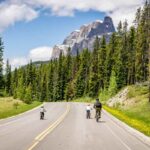
The Icefields Parkway is one of our favourite drives in the Canadian Rockies. Highway 93 North runs for just over 230 km between Lake Louise and Jasper, past glaciers, turquoise lakes, waterfalls and mountain viewpoints. It’s beautiful from the car, but the best part is having time to stop along the way.
You can drive it in around three hours from Banff without stops, but I wouldn’t recommend it. Here’s how much time to allow, which stops I would prioritize and what we’ve learned from driving the parkway on both day trips and longer trips.
Listen to Episode 23 of The Banff Travel Podcast
3 Key Takeaways
- Give the Icefields Parkway a full day. The drive is just over 230 km, with lakes, waterfalls, glaciers and hikes that can easily fill 5–9 hours.
- Choose your main stops and tours. A longer hike or the Columbia Icefield Adventure changes how many viewpoints you can fit in.
- Come prepared for limited services. Fuel up, bring food and layers, download offline maps and check mountain road conditions.
When Is the Best Time to Drive the Icefields Parkway?
The Icefields Parkway is open year-round, subject to temporary closures for weather and avalanche control. For the best time of year for hiking and sightseeing, mid-June through late September is generally the easiest period. Lakes are usually thawed, days are long and most seasonal services are operating.
In May and early June, you may find frozen lakes, snowy or icy trails and avalanche hazards. Late September and October can bring beautiful autumn scenery, but days are shorter and snow is increasingly likely at the higher elevations.
Winter is a very different experience. Proper winter tires are required on the Icefields Parkway from November 1 to April 1, and road conditions can change quickly. Many services close for the season, so don’t plan a winter drive as though it’s a summer sightseeing day.
How Much Time Do You Need on the Icefields Parkway?
For a scenic drive with several stops and short walks, I would allow 5–9 hours. That doesn’t mean you’ll see everything. It means choosing the stops you’re most interested in and taking time to enjoy them.
If you want a longer hike and the Columbia Icefield Adventure, I recommend splitting the drive over two days. We’ve spent three days exploring the parkway and still didn’t come close to seeing every trail or viewpoint.
If you’re doing a Banff–Jasper road trip and returning along the same route, use your two drives for different stops. That makes the trip much more enjoyable than racing to see everything on day one.
What Our Own Icefields Parkway Days Looked Like
One day we left Banff around 8 a.m. and returned around 5 p.m., visiting Peyto Lake, Bow Lake, Waterfowl Lakes, Big Bend and the Columbia Icefield area, including the Toe of the Glacier walk. On another outing, we left later, around 10 a.m., and managed Peyto Lake, Mistaya Canyon and the Columbia Icefield Adventure before getting home around 7 p.m.
On a longer trip toward Jasper, we started from Canmore around 7:30 a.m., stopped at Herbert Lake, hiked Helen Lake (around 12 km return) and stopped at the Crowfoot Glacier viewpoint, Waterfowl Lakes, Coleman Creek, Weeping Wall, Big Bend and Bridal Veil Falls. We also did the Ice Explorer and Skywalk. We reached our accommodation around 6 p.m. and still skipped Bow Lake, Peyto Lake and Mistaya Canyon that day.
On the next day, we hiked Parker Ridge in the morning, visited Tangle Creek Falls, walked to the lower Sunwapta Falls (around 1 km each way), and hiked Beauty Creek to Stanley Falls (about 3.2 km return). We also made time for Stutfield Glacier and a short evening walk at the Toe of the Glacier. That gives you a better idea of how quickly a full day fills up when you want to hike.
Best Stops Along the Icefields Parkway
Bow Lake and Crowfoot Glacier
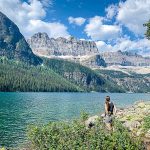
Bow Lake is one of the first major lake stops as you drive north from Lake Louise. Allow at least 30 minutes for the shoreline and views. There are picnic tables, and you can enjoy beautiful glacier scenery without a long hike. The Bow River, which eventually flows through Banff and Calgary, begins in this area.
Crowfoot Glacier is another quick roadside viewpoint nearby. You can also enjoy views of it from higher on the Helen Lake hike.
Peyto Lake
Peyto Lake is a must-see for many visitors, and for good reason. From the elevated viewpoint the turquoise lake has a distinctive wolf-head shape. The main viewpoint is reached by a short paved walk of approximately 600 metres from the parking area. There’s also a second panoramic viewpoint that’s worth considering if you have more time.
Arriving early or later in the day can make the experience more enjoyable because the main viewpoint attracts a lot of people.
Mistaya Canyon
Mistaya Canyon is a short walk from the road, often around 10 minutes each way depending on your pace. The river has carved dramatic curves into the limestone, and the bridge makes a good place to appreciate the rushing water. Stay on the designated trail and viewing areas.
Parker Ridge and the Saskatchewan Glacier
If I could choose only one hike on the Icefields Parkway, Parker Ridge would be high on my list. The climb is steady, but the reward is an impressive view of the Saskatchewan Glacier. Park Ridge involves 2.7 km of climbing to the viewpoint area; allow for the return journey as well.
This is an alpine hike, so snow and wind can affect conditions well into the summer.
Columbia Icefield and Athabasca Glacier
The Columbia Icefield deserves more than a quick stop. You can walk the Toe of the Glacier trail to see the landscape around the Athabasca Glacier, or book the Columbia Icefield Adventure to travel onto the glacier in an Ice Explorer vehicle. The Columbia Icefield Adventure also includes the glass-floored Skywalk.
Allow approximately 3–3.5 hours for the Ice Explorer and Skywalk experience, including transfers, so make the reservation part of your driving plan. Don’t book a tight timeslot and expect to squeeze in every lake and viewpoint beforehand.
Waterfalls North of the Columbia Icefield
Tangle Creek Falls is an easy stop near the road. Farther north, Sunwapta Falls and Athabasca Falls are both worth visiting. At Sunwapta, you can also walk to the lower falls, about 1 km each way. At Athabasca Falls, take time to walk the different viewpoints rather than stopping at just one.
Beauty Creek to Stanley Falls is another favourite of ours. It’s a roughly 3.2 km return hike through a narrowing canyon with several waterfalls, and often feels quieter than other popular canyons, like Johnston Canyon. Allow about an hour, or longer if you’re taking photographs.
Horseshoe Lake and Other Stops Near Jasper
Horseshoe Lake has calm water and short walking options around the shore. We’ve seen people cliff jumping there, although it’s not something I’d suggest without understanding the risks and conditions. It’s a lovely place for a walk or paddleboard.
You can also stop at Honeymoon Lake, which has a small picnic area and campground, and Stutfield Glacier for a quick view. Not every stop deserves equal time. We found Buck Lake underwhelming compared with other places along the drive.
Practical Tips for Driving the Icefields Parkway
Important Tip: Fuel up in Lake Louise or Jasper. Services along the parkway are very limited, and you should not count on reliable cell coverage. Download offline maps, carry food and water, and leave plenty of time for the drive.
Start early, especially when you want to hike or take a popular tour. Pull over only at safe, designated places. Keep your distance from wildlife and never stop in a traffic to photograph animals.
Pack layers and a rain jacket even on warm days. Weather at the high passes and glaciers can be much colder than in Banff.
A picnic is often a better option than depending on the limited places to buy food along the route.
If you enjoy audio commentary, GuideAlong’s Icefields Parkway tour is a fun way to learn about landmarks while driving. It uses GPS rather than requiring a cell signal. I recommend downloading it before leaving town.
Icefields Parkway Planning Questions
What Time Should You Book the Columbia Icefield Adventure?
If you’re driving north from Banff or Lake Louise, I’d generally look for a booking around 1 p.m. or later. That gives you time for places such as Bow Lake and Peyto Lake in the morning, with a little buffer for parking or a longer stop. If you’re coming south from Jasper, 11 a.m. or noon may work better.
These are suggestions, not a timetable. Allow approximately 3 to 3.5 hours for the Columbia Icefield Adventure and book ahead during the busy summer months.
Which Direction Is Better?
Both directions are beautiful. Starting at Lake Louise lets you reach Peyto Lake earlier, before it gets as busy. Starting at Jasper puts stops such as Athabasca Falls and Sunwapta Falls earlier in your day.
What If You Have Only Half a Day?
From Lake Louise, you may need to choose between stopping at Peyto Lake and Mistaya Canyon or pushing farther toward the Columbia Icefield and returning. From Jasper, Athabasca Falls and Sunwapta Falls work well for a shorter outing. Don’t expect to cover the entire Icefields Parkway and all the major viewpoints in half a day.
Where Can You Stay Overnight?
Glacier View Lodge is opposite the Athabasca Glacier. The Crossing Resort at Saskatchewan River Crossing is another practical midpoint option. There are also hostels and seasonal campgrounds along the route.
Do You Need a Park Pass or Special Permission to Fly a Drone?
You need a national park pass for the Icefields Parkway as it falls in Banff and Jasper National Parks. Recreational drone use is not permitted in national parks without special permission. Please respect those rules even if you see someone else flying one.
What If the Weather Is Poor?
The parkway can have snow even in summer. Bring layers and warm clothes in the car. If you have flexibility, I’d choose a day with better weather for alpine viewpoints, but you may also get patches of sun even when the forecast isn’t ideal.
How I’d Plan an Icefields Parkway Day
If you’re visiting the Icefields Parkway as a day trip from Banff or Canmore, choose a handful of stops instead of trying to reach Jasper and see everything in between. Bow Lake, Peyto Lake, Mistaya Canyon and the Columbia Icefield area already make a substantial day when you allow time for walks.
If you’re continuing to Jasper, you can divide the northern stops between your arrival day and your return trip.
For a complete stop-by-stop guide and planning map, see our Icefields Parkway driving guide.
Helpful Links & Resources Mentioned in This Episode
Affiliate disclosure: Some links in this article are affiliate links. We may earn a commission if you book through them, at no additional cost to you.
Need Help Planning Your Banff Trip?
If you are deciding how to divide your time between the Icefields Parkway, Banff and Jasper, my Banff & Jasper Planning Hub includes itineraries and maps to help you build a realistic driving plan.